

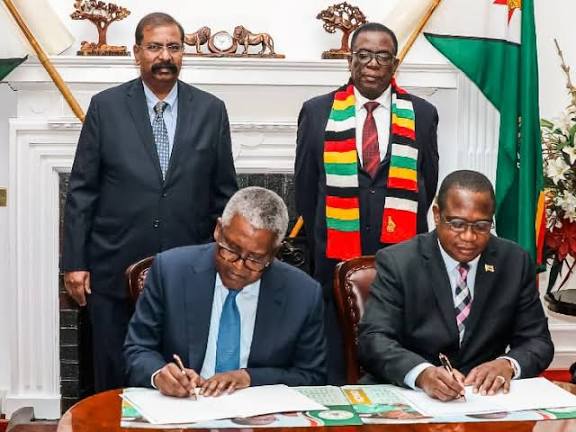
The landmark deal represents a significant boost to Zimbabwe’s industrialisation efforts under President Emmerson Mnangagwa’s Vision 2030 agenda, which seeks to transform the nation into an upper-middle-income economy by the end of the decade.
According to Zimbabwean officials, the Dangote Group’s investment will cut across key sectors — cement production, energy generation, and mining — forming part of an integrated development designed to reduce the country’s dependence on imports while creating jobs and boosting infrastructure.
Project Components
The industrial complex will include a state-of-the-art cement factory with a limestone quarry and grinding plant to meet Zimbabwe’s construction demands. The investment also covers the establishment of a coal mine and power station to provide energy for industrial operations and support the national grid.
Authorities estimate the total cost of the projects at between $800 million and $1 billion, making it one of Zimbabwe’s biggest private-sector investments in recent years. Thousands of jobs are expected to be created, particularly for youths, while local suppliers will benefit through logistics, construction, and raw material contracts.
As part of the agreement, discussions included mining concessions, tax incentives, and work permits for technical experts. The Zimbabwean government assured Dangote Group of a stable and supportive investment environment.
Background
This development follows renewed talks between Dangote and Zimbabwean authorities during the 2025 Afreximbank Annual Meetings held in Abuja. Previous visits by Dangote to Zimbabwe in 2015 and 2018 did not yield formal agreements, but this latest partnership signals a strong commitment from both sides.
The investment comes as Dangote Industries Limited continues its aggressive expansion drive across Africa. The company recently partnered with Thyssenkrupp Uhde Fertilizer Technology to build four new urea-granulation plants in Nigeria, while its 650,000 barrels-per-day refinery in Lagos is set to expand to 1.4 million barrels per day — making it one of the largest single-train refineries in the world.